FaceFury
facefury.com
Have you ever seen a picture and then wondered, ‘Who is that FaceFury?’ There may have been no name given with it. The entry could have appeared suspicious. Or you might have been sure that you had seen that face before, even if you couldn’t quite remember where.
Or it might be that your sole aim had been to spend forty-five minutes exploring an internet rabbit hole even though you had no intention of doing so at the start. You probably would have started by doing a reverse image search and then carried on waiting for the results. That’s precisely the role that FaceFury plays... read more
Pros: Searches by face similarity; Targets specific faces in groups; Results ranked by similarity; Finds faces across indexed sources
Cons: Requires public online presence; Source image quality dependent; Cannot recognize every face










Table of Contents
FaceFury – Who The Hell Is That?
So What Does FaceFury Do?
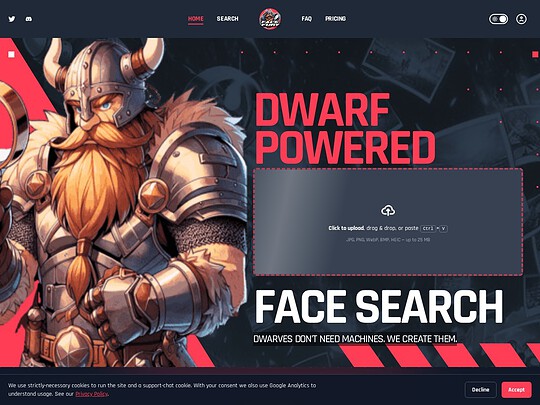
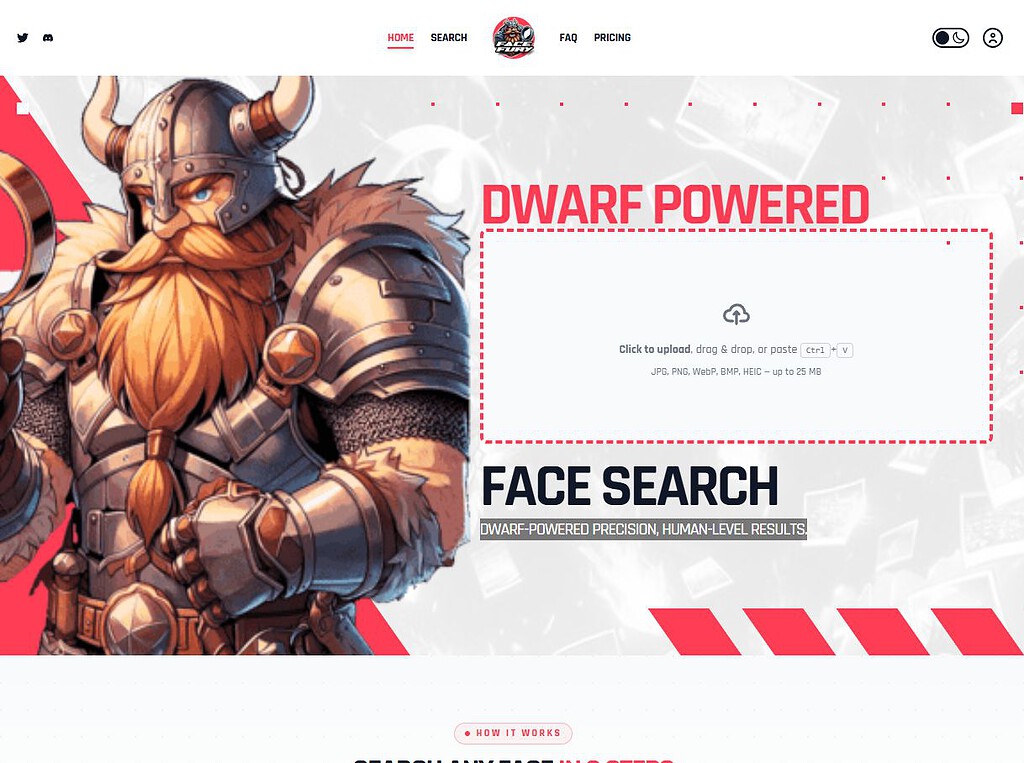
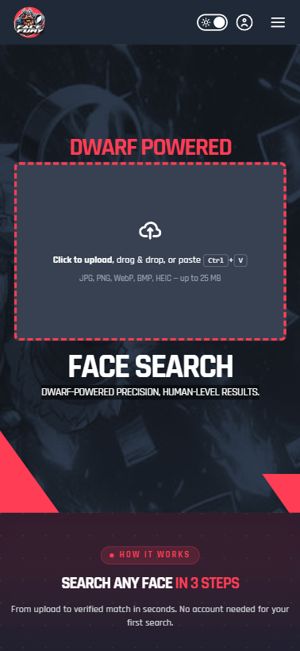
FaceFury is in effect a reverse face-search engine; you upload a picture that contains a face, and the service examines it before searching its indexed sources for other faces that are similar in appearance.
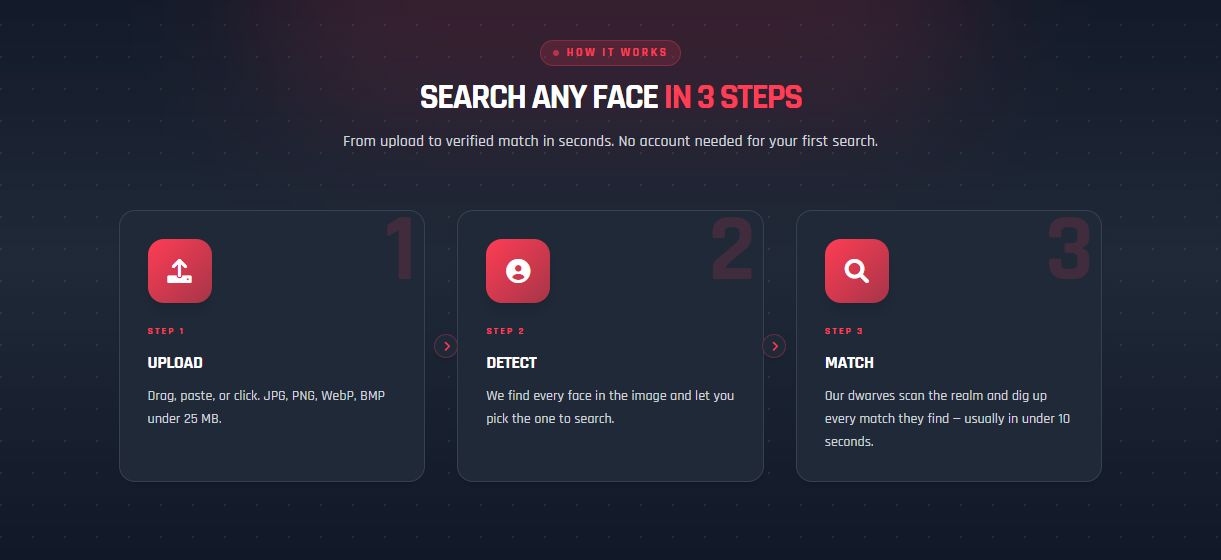
The process is simply ridiculous. Upload a picture, select the face you wish to search for, and then press the button. When uploading a group photograph, you have the option of choosing the specific person you’re looking for rather than the system considering everyone together. After the search has been carried out, you will be given potential matches listed in order of similarity.
There’s no need for any complicated investigation. By no means will FaceFury tell you the person’s complete name and hand you their whole life story. That isn’t the way this works. The results are potential matches together with the publicly available pages on which those faces appear. In truth, it’s probably more useful too.
The Difference Between Image Search And Face Search
What makes FaceFury worth discussing is this part. A typical reverse-image search aims to find out if the exact image or one very similar to it exists elsewhere. That’s useful in the case where you have a photograph and are looking for duplicates. Now imagine that you have one photograph of a person and are trying to locate another photograph of that same person.
The second one could appear entirely different. Different clothes. Different background. Different lighting. Different poses. A conventional image search might fail to match those two pictures. Instead of following the same path, FaceFury is choosing to concentrate on the face.
What it’s actually doing is ignoring the background and the shirt altogether and instead looking to see if that face shows up somewhere else. That sounds a lot more interesting. And Yes, The Image Quality Matters. Before you start uploading the world’s worst screenshot and blaming FaceFury for failing, there’s something you should know.
Your starting image matters. A clear, high-resolution photograph where the face is visible is going to give you a much better chance of finding useful results than a blurry screenshot where the face is approximately the size of a postage stamp. Extreme angles can also make things harder. So can sunglasses, masks, heavy editing, poor lighting, and other things that obscure facial features.
Basically, give the search engine something to work with. If your first result is terrible, try another picture of the same person. Sometimes the difference between a useful search and a useless one is simply choosing a better photograph.
What Can It Actually Find?
Here you need to realise what FaceFury does and doesn’t search. The service looks up information that is available on the web. Include public websites, articles, photographs, videos, and other indexed pages. It doesn’t mean you can upload someone’s face and suddenly gain access to their private Instagram account, locked profile, or some secret underground database containing every photograph they’ve ever taken. If something isn’t publicly available, FaceFury can’t simply summon it from another dimension. And that’s actually a good thing to make clear.

The tool is useful because it can connect publicly available information that you may not have found yourself. It isn’t a magical key to the private internet.
This Is Where It Can Get Surprisingly Useful
Suppose you come across a profile picture that looks suspicious. You could search the exact image using a normal reverse-image search. Maybe you’ll get lucky. What if the person has used a completely different photograph in another case? That’s the situation in which face search proves to be useful.
Perhaps you might discover the same face appearing in an old news article, on another public profile, on a website you might not know about, or in a completely unrelated photograph. And it can also be useful for checking whether your own photographs are floating around online, investigating impersonation, finding the source of public images, or simply figuring out where you’ve seen someone before. Other times you’re just not making an attempt to identify anyone. You might just want to answer the question:
“How in the world did this picture get here?”
That is entirely a valid reason for carrying out a search.
Don’t Treat Every Match Like A DNA Test
But I wouldn’t advise blindly trusting each and every result. FaceFury bases its search results on how similar they are, but similarity does not necessarily mean certainty. Two people can look remarkably alike. A photograph can also be misleading, edited or taken from an unusual angle. If you obtain a promising result, make sure to actually examine it. Check the source. Compare the face. Read the surrounding information. Check that all of it makes sense.
A search result that is provided to you should only give you a clue, not make it seem as though you have just solved the mystery of the century. That will be especially important should you be using the service in order to investigate a suspicious account or to make assumptions as to someone’s identity.
What About Privacy?
This is most likely the section that people should give more attention to when using any facial-search service. FaceFury states that search images that are uploaded are not included in the public index, and the company adds that the uploaded images as well as the facial data derived from them are deleted automatically after a certain period of time.
There is also a procedure available if you do not wish your image to appear in FaceFury’s results. That’s actually worth having. In fact, facial search is not only useful when you’re trying to find some other person; you might also want to know if you yourself can be identified. FaceFury is a site that allows users to get in touch with the company and ask for their image to be taken down from search results, provided that it is verified.
I still suggest that you read the privacy information yourself before uploading anything that is particularly sensitive, and I wouldn’t casually supply my facial information to any random website that comes up in Google.
How Much Does It Cost?
To begin with, you have a free search that is sufficient to determine if the service can actually do anything useful with your image. Following that, FaceFury offers a number of subscription plans. The Basic plan is $24 a month and gives you up to 50 searches each day. The Founder plan is $47 a month and raises the allowance to 250 searches each day, together with extra founder benefits during the beta phase of the service.
There’s also the Unlimited plan, which costs $199 a month. Yes. Two hundred bucks. It’s clearly not designed for someone who wants to look through one photograph every six months; the more expensive plans are much more suitable for people who have a real need to carry out a large number of searches.
For anybody else, I’d begin by using the free search and check whether you actually like the results before you take out your wallet.
Is FaceFury Worth Trying?
Personally for me, I’d say yes, not because it will magically recognize every face you present it with, but because the fundamental concept is truly useful. useful. A normal reverse-image search will check whether or not an image has been found somewhere else. FaceFury inquires whether or not the face has appeared anywhere else. That’s a subtle difference, but it can produce completely different results.
The biggest limitations are also pretty obvious. The person needs to have some publicly accessible presence for you to find anything useful, and your source image needs to be good enough for the system to work with.
Still, if you’ve ever found yourself staring at a random photograph and wondering where else that face exists online, FaceFury is a service that is very much worth testing. And you can do that without paying anything for the first search and see what you come up with. So go ahead. Upload the picture. Let the internet and FaceFury do their thing.
Just don’t blame me if you ever disappear down a three-hour rabbit hole afterward.